Over the last half century we have seen an unprecedented shift in the farming systems that produce the majority of our food. The majority of us are now dependent on massive, agri-business farming systems, which are in turn dependent on seeds, pesticides and machinery—all of which are controlled and supplied by some of the largest corporations the world has yet seen.
Food has become a global commodity and is now subject international guidelines developed through the Codex Alimentarius Commission. These guidelines favour the international trade of processed, low quality foods by transnational corporations. These foods are a very significant contributor to the increasing rates of degenerative disease, from cancer to heart disease, and diabetes to obesity. This is a stark contrast from the small-holder systems that relied on locally-produced seed to provide wholesome wholefoods—the system that met the subsistence needs of our ancestors for the vast majority of the 10,000 years since agriculture was first recorded.
View below a youtube clip about filmmaker Marie-Monique Robin's new documentary, released in France in March 2008, called "The World According to Monsanto". It details the troubling past of one of the world's biggest agrochemical and seed companies, Monsanto—a company that appears to be controlling our food supply to a greater extent than any other single entity on the earth today.
To view the full video, being streamed by Dr Mercola's website, click here.
Given that it is now recognised by all health authorities around the world that diet and lifestyle are the primary factors in all major chronic diseases, it beggar’s belief that the medical establishment still remains relatively uneducated and uninformed on this subject and continues to peddle drugs as the primary treatment regimen.
The Food4Health campaign aims to stimulate greater emphasis on the use of foods and other lifestyle approaches for preventative healthcare, rather than exerting the effort and the money on an already diseased and toxin-laden body. If there’s one thing all the health statistics agree on—this is not sustainable.
We live in an era where chronic diseases like coronary heart disease (CVD), cancer, diabetes and increasingly obesity, are storming ahead as the leading causes of premature death. The key feature of all these diseases is that they have an incontrovertible relationship to diet and lifestyle. This means that lifestyle risk factors such as diet, nutrition, exercise, stress levels, alcohol consumption and smoking have a powerful influence on the health of a nation.
Despite what we are constantly being told, we may be living longer in statistical terms, but our morbidity rates (the rates at which we are living with illness) are increasing dramatically. Interestingly, these statistics don’t make it into the mainstream press as readily as the so-called survival rates! Depending on exactly which figures you are looking at, and which countries they emanate from, there is a suggestion that we may have reached a point where we are already starting to see a decline in life expectancy in countries like the UK and USA. For a list of countries with decreasing expectancy click here and for a list of countries showing the number of morbidity free years click here.

Over the last 50 years the levels of key minerals within fruits and vegetables in the UK alone, have declined by up to 70%. Whilst dietary surveys show that large sectors of the population are deficient in particular vitamins—e.g. C, D, K—or minerals—e.g. selenium, zinc, magnesium—despite the growth of the organic fruit and vegetable sectors, and the increased availability of ‘fresh’ fruits and vegetables. The harsh reality is that even an apparently ‘balanced diet’ today will often leave you deficient in particular nutrients and your immune system less than fully primed to handle both toxic and microbiological assaults. Worse still, the typical children’s diet is so bad in the western world, that unless we see profound changes over the next few years, we can expect to see an explosion of cancer, CHD and other degenerative diseases unlike anything we have experienced to date.
Our immune systems and self-healing mechanisms are crying out for us to:
The disassociation from nature and our natural roots has to come to an abrupt end if we are to reclaim our health and have an influence on the future health of our nations.
That's why you have to tell people about the Food4Health campaign!

Buying local produce from a farmers' market on a regular basis makes a big contribution to your own health as well as to the system that provides your food
See the trailer of Kevin Miller's stunning new documentary Generation RX below—and decide for yourself.
The following guidelines have been developed on the basis of published research, clinical evidence and the experience of thousands of people who choose to use diet and lifestyle as their primary approach to maintaining good health.

Consume at least seven portions of fresh fruit and vegetables (which equates to roughly 400 to 600 g) a day, every day. This recommendation derives from guidelines to consumers developed by the United States National Cancer Institute and American Institute for Cancer Research which stipulate five to nine servings per day.
Focus on selecting diverse types of fruit and vegetables—don’t always have the same types. Diversity is very important to ensure you get a good mix of different types of nutrients. Broccoli is an extremely healthy vegetable, but don’t only eat broccoli every day, to the exclusion of other vegetables.
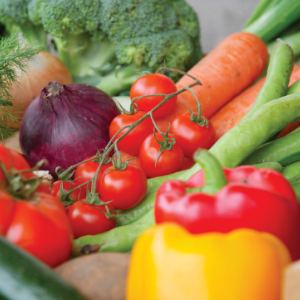
Focus on mixing lots of different colours too: dark greens, oranges, reds, light greens, yellows, and so on. These natural colours are actually comprised of different nutrients, many of which have cancer protective properties. Red foods contain lycopene (a carotenoid), which is associated with a reduction in cancer risk, especially prostate cancer. Yellow and orange foods also contain different blends of powerful natural carotenoids, a group of some 400-500 naturally-occurring substances with cancer-fighting properties. Green foods like broccoli, kale and Brussels sprouts contain glucosinolates, which are associated with decreased cancer risk. White-green foods, such as garlic and onions, contain allyl sulphides that also appear to be important to your anticancer armoury.
Eat home-prepared food as often as you can and don’t overcook or over-steam your vegetables and certainly don’t microwave them. This type of cooking breaks down a lot of the enzymes and other nutrients. It also damages the ‘life energy’ within the food.

Consume complex, rather than simple, carbohydrates. Use a Glycaemic Index (GI) or better still, a Glycaemic Load (GL) chart and select moderate to low glycaemic ‘carbs’ whenever you can. Don’t consume white bread, go for whole grain and seed breads. Once grains are refined, they’ve lost up to 80% of their vitamin and mineral content.
An example of a GI table can be found at: www.weightlossresources.co.uk/diet/gi_diet/glycaemic_index_tables.htm.

Take your protein from lean meats, fish, nuts, seeds and vegetables, such as peas, beans and non-GMO/organic fermented soya products (e.g. tofu, tempeh), depending on your preferences. Tofu and tempeh, consumed in large quantities by the Japanese and South-East Asians, and now widely available in UK supermarkets, are good sources of phytoestrogens and contribute to reduced cancer risk, moderation of post-menopausal symptoms in women and reduced LDL cholesterol. These vegetable protein sources are also virtually fat-free. What you should also try to do is avoid fatty, non-organic meats that deliver saturated fats and have accumulated toxic chemicals.

Fats are good for you, as long as they are the right type. They should especially come from plants (notably oils and seeds) and fish, rather than from farm animals. They should also not be processed. Unsaturated fats, like extra virgin olive oil, hemp oil and flax oil, are well known to be very good for you, as are fats and oils in open water, non-polluted fish. Don’t scrimp on these healthy fats, they are a wonderful energy source and contain nutrients, like essential fatty acids, that are very good for you. You can use them in cooking and in salad dressings. Avoid saturated fats in cheap and processed meats. Also avoid trans and hydrogenated fats as found in many processed foods.

Consume as much organic and farm-fresh food as your budget will allow. When it comes to prioritising, ensure that whenever you are dealing with fatty foods, such as meats and dairy—as well as salad vegetables and fruits, go for organic. This helps to reduce your chemical load. Another benefit of certified organic foods is that crops must be grown in the soil, so you get uptake of trace and ultra-trace minerals. Many people don’t realise that a large amount of the non-organic salad produce bought in supermarkets is grown hydroponically in water containing a very limited range of nutrients. Such crops, for example tomatoes, peppers (capsicums) and cucumbers, won’t have ever touched soil!

Take high quality supplements to fill the nutritional gap between your foods and the levels and types of nutrients required for optimum health. The micronutrients that most people are low in include specific vitamins, minerals and plant nutrients, as well as Omega-3 fatty acids, as found in oily, cold water fish and high quality fish oil or plant-based oil supplements.
When taking vitamins and minerals, try to, as far as possible, rely on food-form vitamins and minerals as these are in the same form to the nutrients in natural foods to which are bodies are adapted.
High dosages of nutrients, best taken under the direction of a qualified nutritional or functional medicine therapist, can be very helpful to restore normal physiological functions and good health. High dose nutritional therapy is however heavily under attack by regulators, especially in Europe.
Renowned medical doctor and nutritionist, Dr Emanuel Cheraskin, of Alabama University Medical School, proposed Suggested Optimal Nutritional Allowances (SONAs) in place of Recommended Daily Allowances (RDAs) as early as the 1980s.
SONAs for some common vitamins, minerals and cofactors are given below:

Along with his colleague, WM Ringsdorf, Cheraskin also found decades ago that nutritional requirements increase substantially as we age (e.g. Cheraskin and Ringsdorf, Risk Factors in the Aging Process, The Journal of the Royal Society for the Promotion of Health, 1973; 93: 302-304). Is it any surprise that the over-50s are some of the most enthusiastic consumers of vitamins?
For further information on the scientific case for supplementation, download an article by Dr Robert Verkerk entitled the 'The case for nutritional supplementation'.
Click here to go back to Current Campaigns page